How Fast Do I Need to Respond to a New Lead Before They Call Someone Else?
September 4, 2026 6 min readBy Shannon Martel
You sent a quote on Tuesday. By Friday you had not heard back, so you called — and they told you they had already gone with someone else. Not because your price was wrong. Not because your work is not good. They just did not hear back from you fast enough.
The speed of your first response is not a sales skill. It is a systems problem. And there is a specific number you need to hit — most service businesses are nowhere close to it.
In this post, we are going to show you exactly how fast “fast enough” really is, what happens to your odds with every minute you wait, and how to make sure every lead gets a response that wins — without you ever stopping what you are doing.
The Number That Determines Whether You Win or Lose the Job
There is one piece of research that every serious conversation about lead response time comes back to, and for good reason.
Companies that respond to a new lead within 5 minutes are 100 times more likely to qualify that lead than companies that wait 30 minutes.
Not 10% more likely. Not twice as likely. One hundred times.
A study published in Harvard Business Review measured response time against lead conversion across thousands of businesses. The conclusion was sharp and clear: the businesses responding in minutes were playing a completely different game than the businesses responding in hours.
For a service business owner, that number has a very specific meaning. Every lead that waits more than 5 minutes for a response is a lead you are working uphill to recover. And the uphill gets steeper fast.
The average response time for a small service business is more than 4 hours. That means most contractors, trades people, and local service providers are sitting in the “already lost it” window before they ever make contact. The lead called them. They just were not there fast enough to answer.
What Happens to Your Odds Every Minute You Wait
The drop-off in lead qualification odds is not gradual. It is a cliff.
Respond within 1 minute: your odds are at their peak. The lead is still holding their phone, still thinking about your business, still open to a conversation. You are the first voice they hear.
Respond in 5 minutes: still strong. Most leads are still engaged. You are in a small group of businesses that moved fast enough to be taken seriously. You are in the running.
Respond in 10 minutes: your odds are slipping. Some leads have already dialed another number. You are still in the conversation but you are no longer first.
Respond in 30 minutes: you are 100 times less likely to qualify this lead than someone who responded in under 5 minutes. In many cases, the decision has already been made.
Respond in an hour or more: you are essentially cold-calling someone who has moved on. They may still take your call, because most people are polite, but they are no longer comparing you to other options. They have already chosen.
The window is real, it is narrow, and it closes fast. Knowing this is not enough. The businesses winning on lead response right now are not more disciplined. They are more automated.
Why Most Service Businesses Are Still Too Slow
If the research on response time is this clear, why are most small service businesses still responding in hours?
Because knowing something and being able to execute it are two very different things.
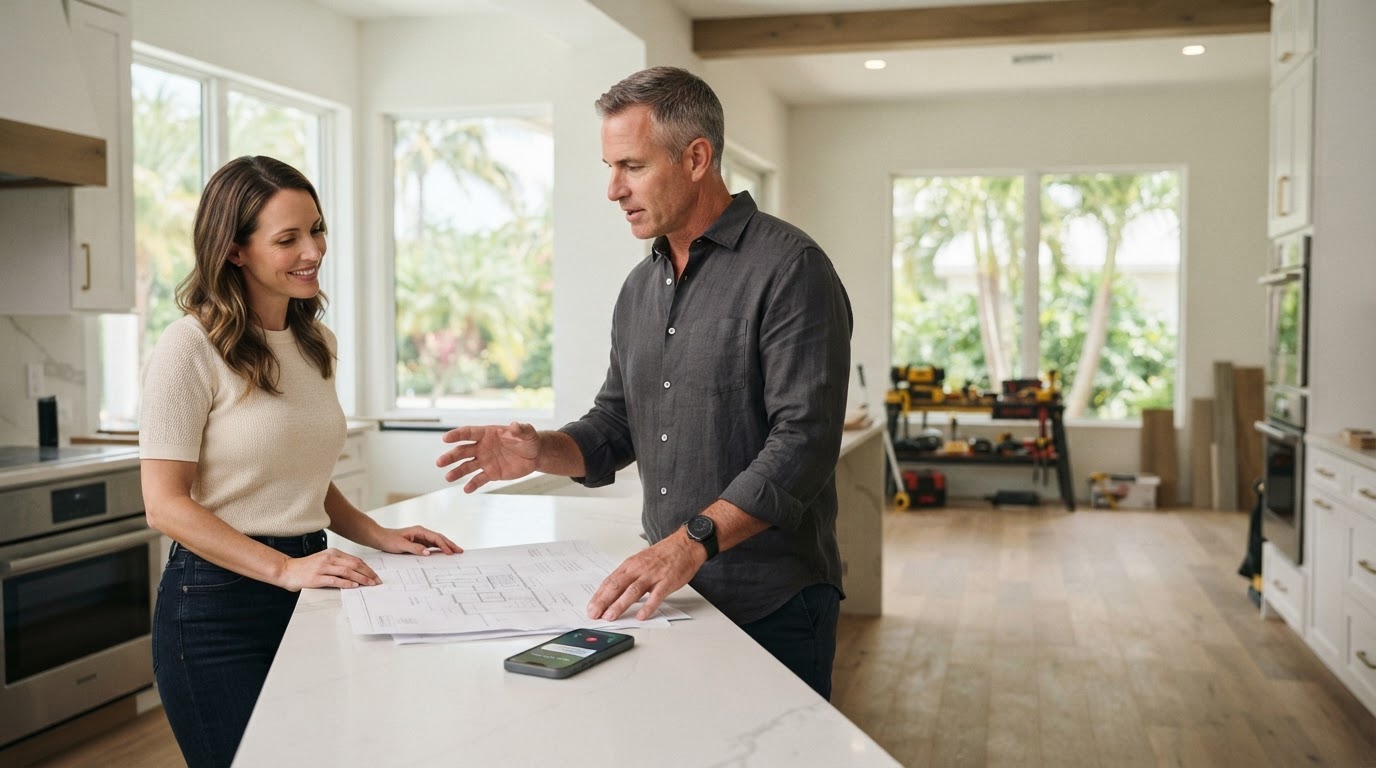
You are on a job. Your hands are busy. Your phone is in your pocket, vibrating every time a text or email comes in. Stopping mid-installation to take a sales inquiry is not realistic, and honestly it is not professional toward the customer you are already serving.
You have no one else handling it. Most service businesses are owner-operated. There is no receptionist screening calls, no admin logging web form submissions, no one watching the inbox while you are on a roof or under a sink. It is just you, and you are already doing three other things.
Leads are coming in through different channels all at once. A phone call. A website form. A Facebook message. A Google Business inquiry. Each one in a different place, each one needing a response. By the time you notice one, two more have come in and gone cold.
This is not a discipline problem. It is a systems problem. The solution is not trying harder. The solution is building a system that responds without you.
What Fast Enough Actually Looks Like in Practice
Estimate Your Lead Follow-Up Opportunity
The financial impact of inconsistent follow-up depends on your lead volume, average customer value, close rate, and current process. Instead of relying on averages, estimate the opportunity using your own numbers.
Here is the honest answer to the question in this post title: fast enough is within 5 minutes. Ideally within 60 seconds.
But here is the more important answer: for most service business owners, hitting that window manually during a busy day is not possible. So fast enough has to mean automated.
A fast response does not have to be a phone call. It does not have to be you personally picking up and walking through every detail. What it has to be is an immediate acknowledgment that tells the lead: we see you, we are here, and help is coming.
Here is what that looks like in a real situation.
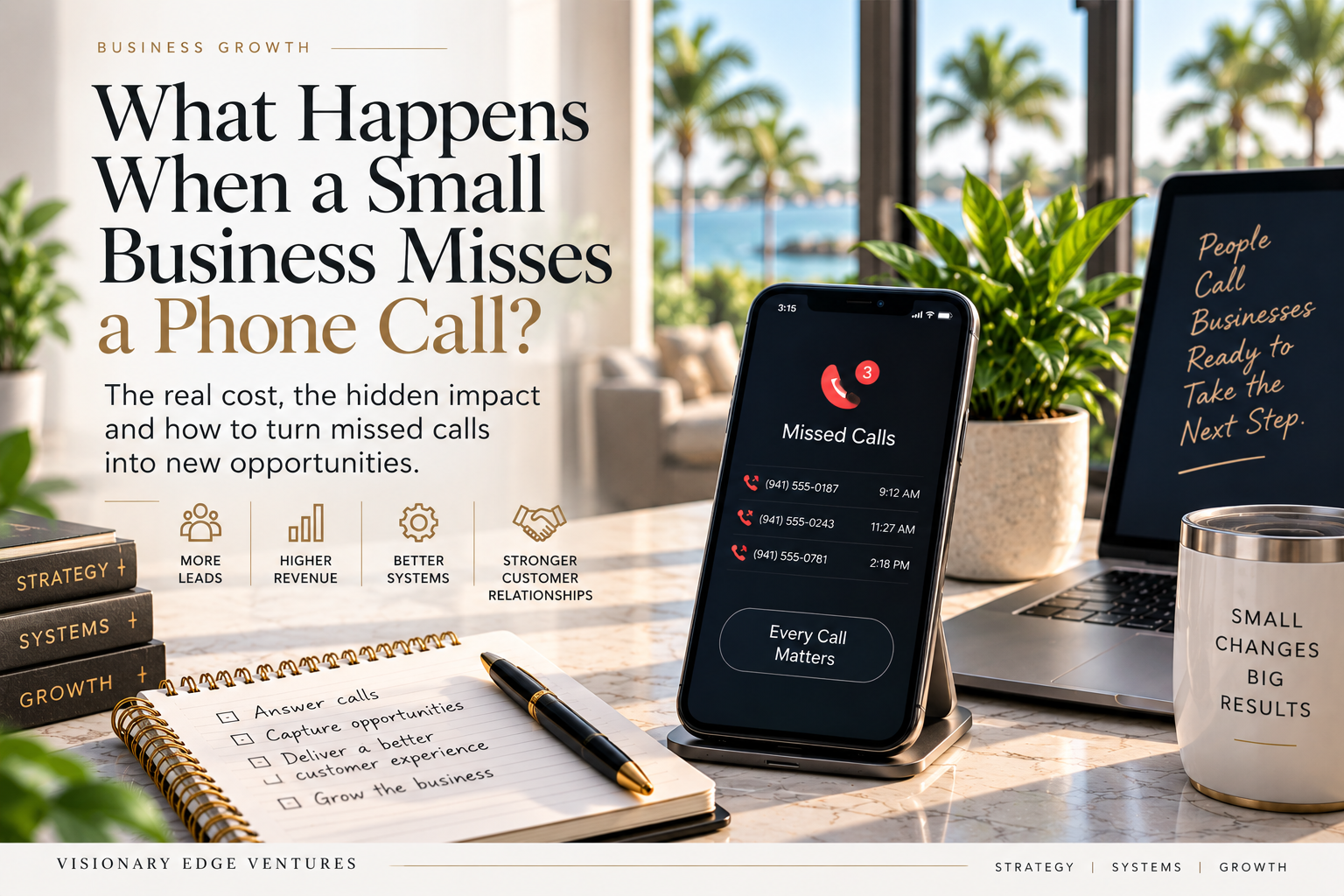
A homeowner calls your business number at 2:17 PM on a Wednesday. You are on a panel upgrade in the next town over. The call rings through and goes unanswered. Within 45 seconds, they receive a text from your business number: “Hey, this is [Business Name], sorry we missed you — what can we help you with today?”
That one message does three things. It shows the customer you are responsive, even when you are physically unavailable. It opens a text conversation they can reply to from their phone without waiting on hold or leaving a voicemail. And it keeps you in the running while you finish the job you are already on.
That is fast enough. That is what wins.
How to Hit a 60-Second Response Without Stopping Work
You do not do this manually. You build it once and let it run.
Missed call text back. Every time a call goes unanswered, your system sends an automated text to the caller within 30 to 60 seconds. No action required from you. The lead gets a response before they have time to scroll back to Google and dial the next number.
Web form auto-response. Every time someone submits a form on your website, they receive an immediate reply — not a generic “we will be in touch” but a specific, human-sounding message that acknowledges what they submitted and tells them what to expect next. Within seconds of them clicking submit.
AI-powered follow-up. When the lead replies to your text or email, an AI assistant continues the conversation. It can answer questions about your services, qualify the lead by asking the right questions, and send a booking link so they can schedule directly into your calendar. You stay on the job. The lead moves forward.
One unified inbox. Every lead from every channel — phone calls, texts, web forms, chat widgets, social messages — lands in one place. When you do check in between jobs, you see everything in one view with full context, ready for you to pick up where the automation left off.
Here is what to do this week to start closing the response gap:
Check how many unanswered calls your business received in the last 30 days. That number is your starting point.
Set up a missed call text back on your business phone number. This is the fastest, highest-impact fix and most platforms can have it running in an afternoon.
Add an immediate auto-reply to your website contact form so no submission goes silent.
Pick one inbox to check between every job — not email, not texts, not Facebook separately. One unified view.
Track your response time for one week. You cannot improve what you do not measure.
Response time is one of the three most common places service businesses lose revenue without realizing it. If your leads are waiting more than 5 minutes to hear from you, you are handing jobs to competitors every single day — and the fix is simpler than most people expect.
A free Growth Audit looks specifically at how your current lead response works, where the gaps are, and what to set up first to start recovering those leads automatically.
Written by Shannon Martel, founder of Visionary Edge Ventures. Shannon helps service business owners build AI-powered growth systems that capture leads, follow up automatically, and book more jobs — without adding more staff. Book a free call.
Frequently Asked Questions
AI Lead Follow-Up
Respond to new leads instantly using intelligent SMS, email, and conversational AI.
The calculator can help estimate where opportunities may be at risk. A Visionary Edge Growth Systems Audit examines what is actually happening across your lead capture, follow-up, booking, sales, reputation, and retention systems.